

Introduction
Saudi Arabia has one of the most advanced road networks in the Middle East, connecting major cities such as Riyadh, Jeddah, Dammam, Makkah, Madinah, and many smaller towns. Every day, millions of residents, expatriates, and tourists travel on these highways for work, business, education, and religious purposes. With increasing numbers of vehicles on the road, maintaining traffic safety has become a top priority for the Saudi government.
To reduce road accidents and encourage responsible driving, the General Directorate of Traffic (eMoroor) has implemented strict speeding regulations. Speed cameras, automated monitoring systems, and digital traffic enforcement help ensure that motorists follow speed limits.
Many drivers believe that exceeding the speed limit by a few kilometers per hour is harmless. However, even a small increase in speed significantly raises the risk of accidents, injuries, and fatalities. That is why Saudi Arabia imposes financial penalties based on how much a driver exceeds the speed limit.
This guide explains the latest speeding fines, how the penalty system works, why these rules exist, and how drivers can avoid violations while staying safe on Saudi roads.
Why Speed Limits Matter
Speed limits are designed to protect everyone using the road.
Higher speeds reduce the driver’s reaction time and increase the stopping distance required to avoid obstacles. Even modern vehicles equipped with ABS, airbags, and advanced safety systems cannot completely eliminate the dangers of excessive speed.
According to international road safety studies, speeding contributes to:
- Increased accident rates
- More severe injuries
- Higher fatality rates
- Reduced reaction time
- Greater vehicle damage
Saudi Arabia continues investing heavily in improving road safety by combining better infrastructure with stricter enforcement.
Traffic Monitoring in Saudi Arabia
Saudi roads are monitored using advanced technologies, including:
- Saher speed camera system
- Fixed radar cameras
- Mobile radar patrols
- AI-powered traffic monitoring
- Automatic license plate recognition
- Digital traffic management
These systems operate 24 hours a day and automatically record traffic violations without requiring a police officer to stop the vehicle.
Speed Limits on Saudi Roads
Speed limits vary depending on the type of road.
Common examples include:
- Residential areas
- Urban roads
- Ring roads
- Highways
- Expressways
Always pay attention to the posted speed limit signs because limits may change depending on road conditions, construction work, or weather.
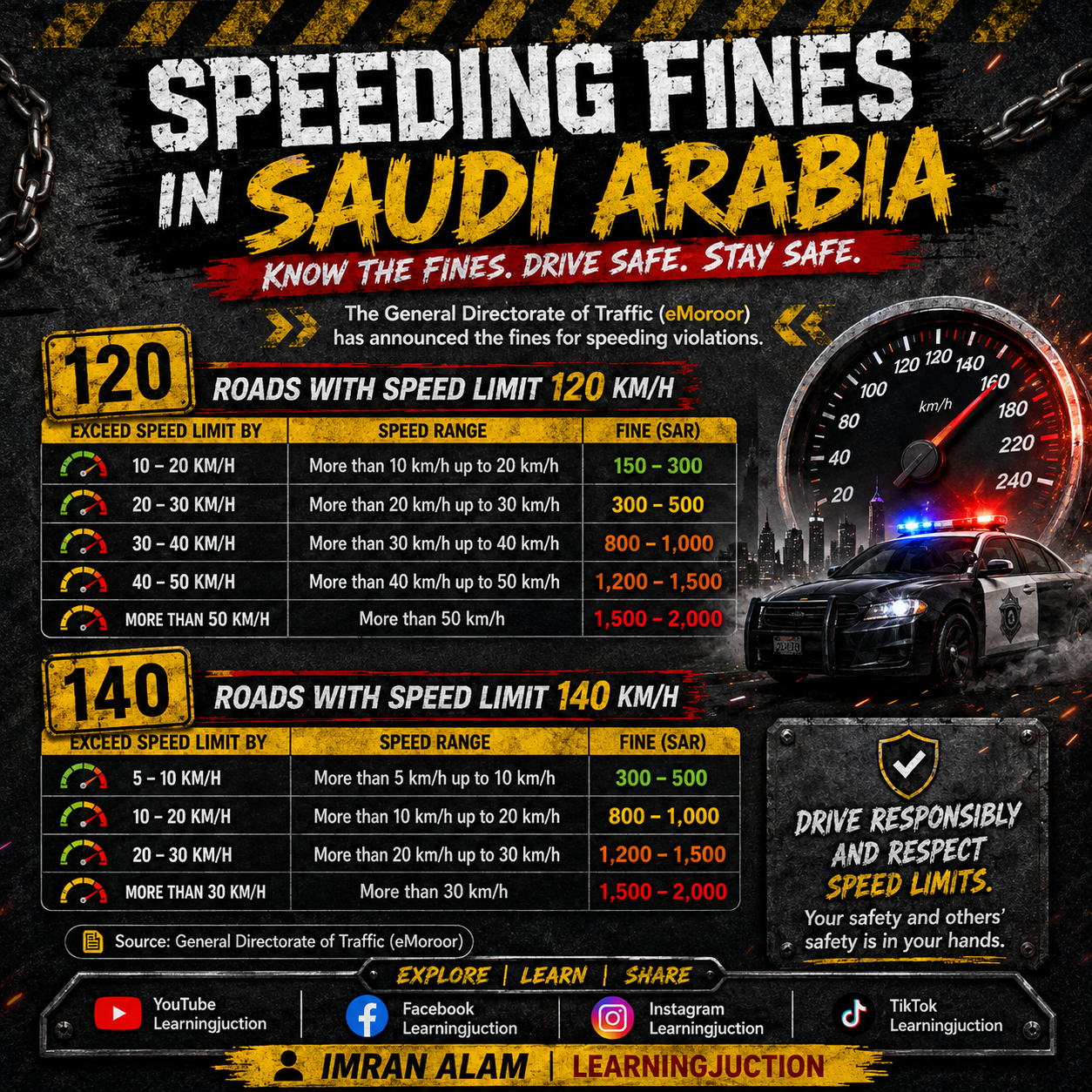
Speeding Fines for Roads with a 120 km/h Speed Limit
If the posted speed limit is 120 km/h, the following penalties apply.
| Exceeding Speed Limit | Fine (SAR) |
|---|---|
| More than 10 km/h up to 20 km/h | 150–300 |
| More than 20 km/h up to 30 km/h | 300–500 |
| More than 30 km/h up to 40 km/h | 800–1,000 |
| More than 40 km/h up to 50 km/h | 1,200–1,500 |
| More than 50 km/h | 1,500–2,000 |
Speeding Fines for Roads with a 140 km/h Speed Limit
For roads where the maximum speed is 140 km/h, penalties are as follows.
| Exceeding Speed Limit | Fine (SAR) |
|---|---|
| More than 5 km/h up to 10 km/h | 300–500 |
| More than 10 km/h up to 20 km/h | 800–1,000 |
| More than 20 km/h up to 30 km/h | 1,200–1,500 |
| More than 30 km/h | 1,500–2,000 |
The higher speed roads have stricter enforcement because vehicles are already traveling at high speeds, making even small increases more dangerous.
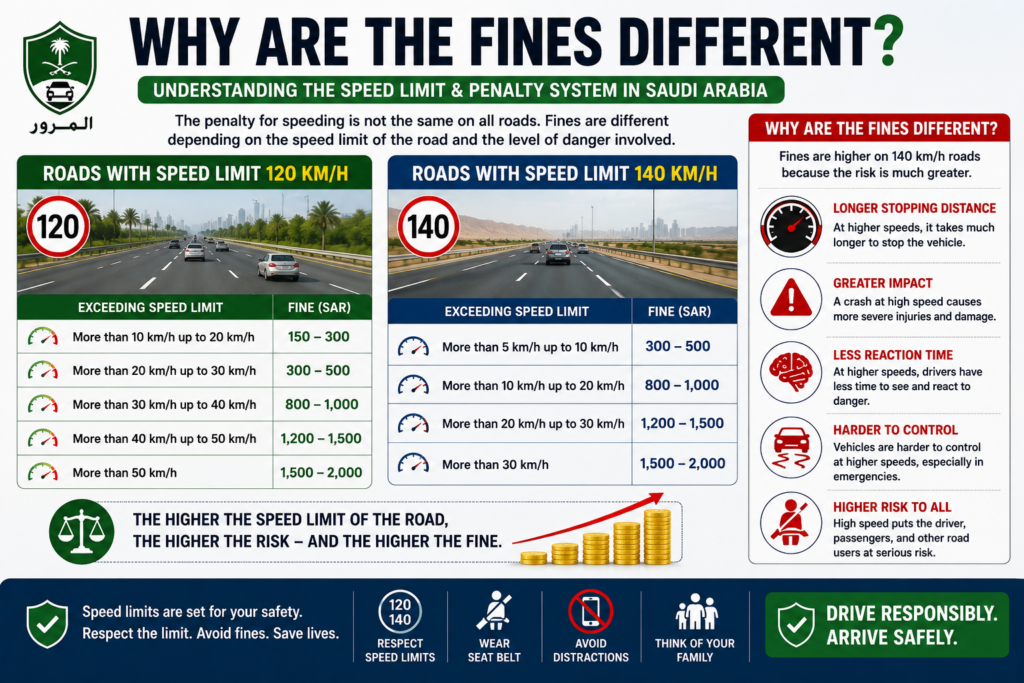
Why Are the Fines Different?
Some drivers wonder why the penalty structure changes between 120 km/h and 140 km/h roads.
The reason is simple.
At higher speeds:
- Braking distance becomes much longer.
- Tire grip decreases.
- Vehicle stability is reduced.
- Collision impact becomes much more severe.
- Driver reaction time becomes more critical.
Therefore, the law treats excessive speed on faster roads more seriously.
What Happens After a Speeding Violation?
When a speed camera detects a violation:
- The vehicle is photographed.
- The speed is recorded.
- Vehicle registration information is verified.
- The violation is entered into the traffic system.
- The registered owner receives notification.
- The fine appears in traffic records.
Drivers can usually check their violations through official government digital services.
Financial Impact of Speeding
Many drivers underestimate the cost of repeated speeding.
For example:
- Two violations of SAR 300 each = SAR 600
- Three violations of SAR 1,000 each = SAR 3,000
- Multiple high-speed violations can quickly become very expensive.
In addition to fines, unsafe driving can also result in:
- Higher insurance costs
- Vehicle repair expenses
- Lost work time
- Medical bills after accidents
Driving within the speed limit is always cheaper than paying repeated penalties.
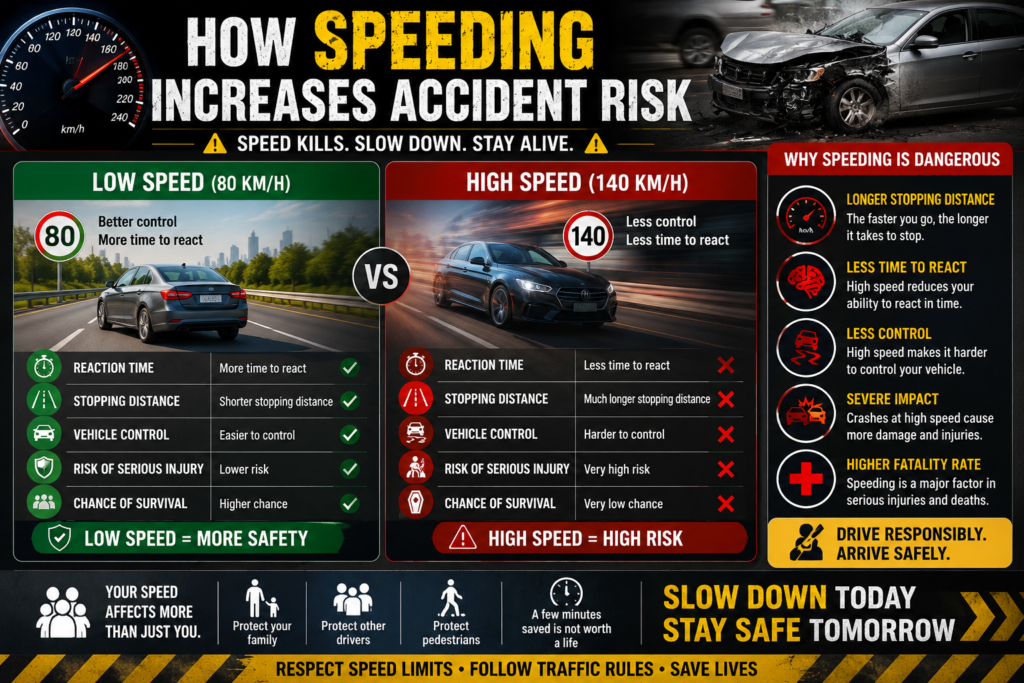
How Speeding Increases Accident Risk
The faster a vehicle travels, the less time the driver has to react.
For example:
At 80 km/h:
- The driver has more time to brake.
- Vehicle control is easier.
At 140 km/h:
- Stopping distance nearly doubles.
- Small steering mistakes become dangerous.
- Tire failure becomes more serious.
- Emergency braking is less effective.
Even a one-second delay in reaction can make the difference between avoiding a collision and causing a major accident.
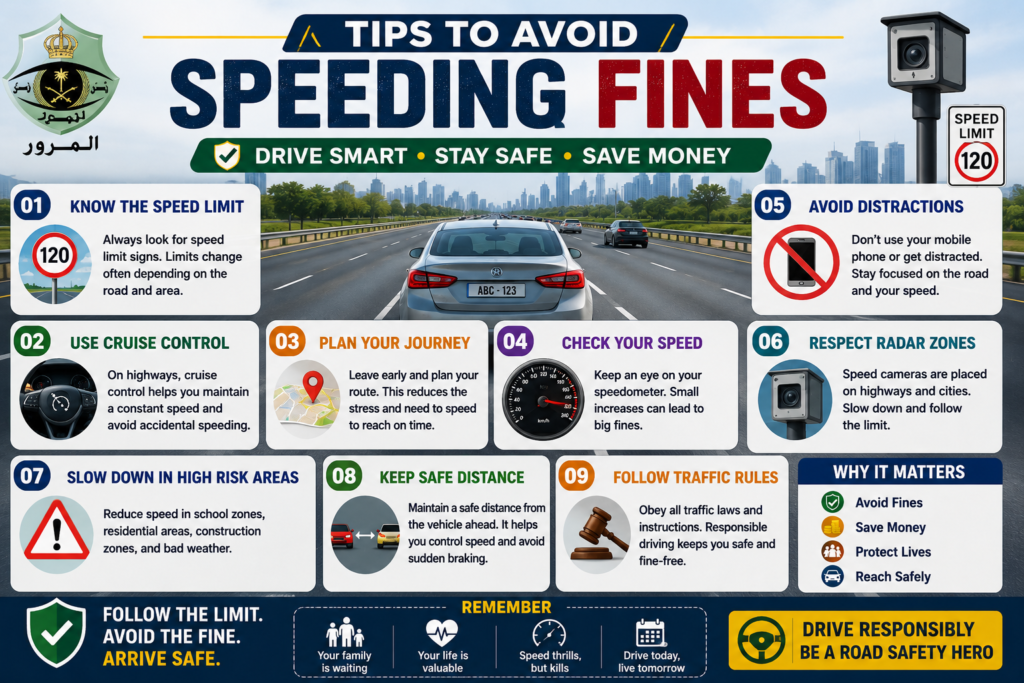
Tips to Avoid Speeding Fines
1. Watch Road Signs
Always observe speed limit signs, especially when entering cities, construction zones, or residential areas.
2. Use Cruise Control
On highways, cruise control helps maintain a constant legal speed and reduces accidental speeding.
3. Slow Down Before Curves
Curved roads require lower speeds for better vehicle control.
4. Allow Extra Travel Time
Leaving home earlier reduces the temptation to speed.
5. Stay Focused
Avoid distractions such as mobile phones while driving.
6. Monitor Your Speedometer
Regularly check your speed instead of relying on how fast the vehicle feels.
7. Follow Weather Conditions
Reduce speed during:
- Rain
- Dust storms
- Fog
- Heavy traffic
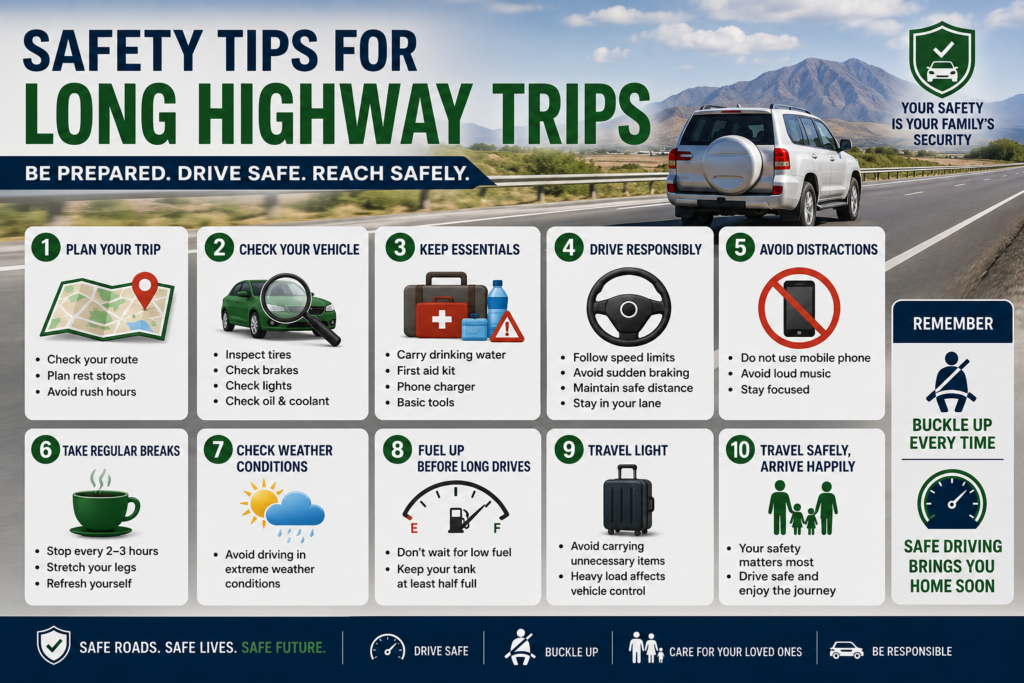
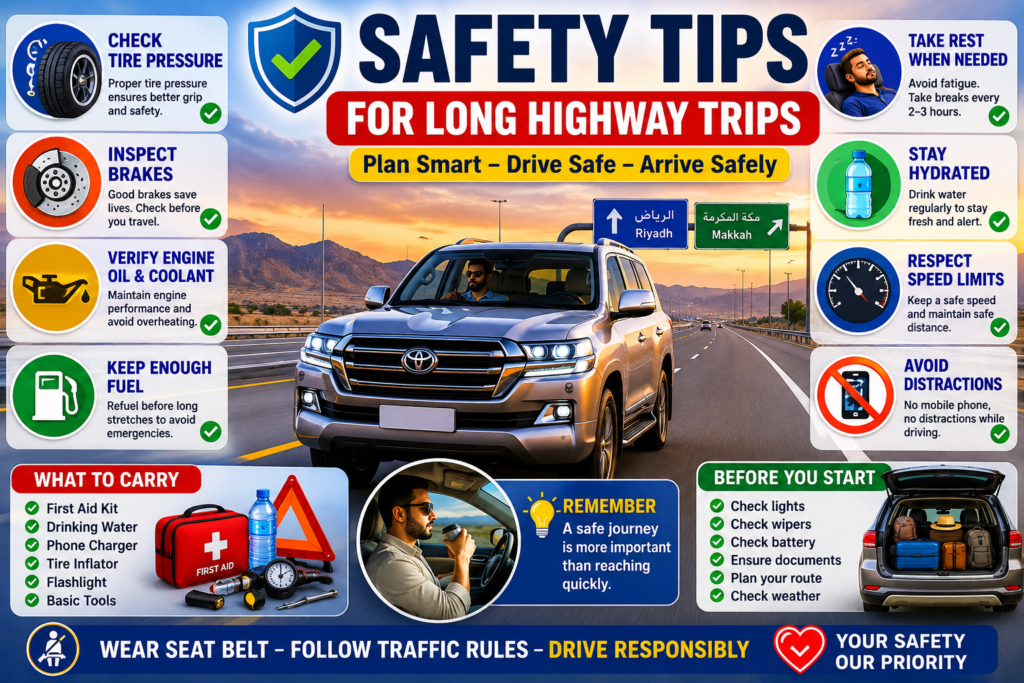
Safety Tips for Long Highway Trips
Saudi Arabia has many long-distance highways where drivers may travel for several hours.
Before starting a trip:
- Check tire pressure.
- Inspect brakes.
- Verify engine oil.
- Ensure coolant levels are sufficient.
- Carry drinking water.
- Rest before driving.
Fatigue can be just as dangerous as speeding.
Common Driving Mistakes
Drivers often receive speeding fines because they:
- Ignore changing speed limits.
- Accelerate while overtaking.
- Fail to notice radar cameras.
- Drive too fast on downhill roads.
- Rush to reach destinations.
Avoiding these habits improves both safety and compliance.
Importance of Defensive Driving
Defensive driving means anticipating potential hazards before they occur.
Good defensive drivers:
- Maintain safe following distances.
- Signal before changing lanes.
- Avoid sudden braking.
- Respect other road users.
- Stay alert at all times.
These habits reduce both accidents and traffic violations.
Advice for New Drivers
If you recently obtained your driving license:
- Practice maintaining a constant speed.
- Learn highway driving gradually.
- Avoid aggressive acceleration.
- Respect speed limits even when traffic is light.
- Never compete with faster vehicles.
Experience develops over time, but safe habits should begin immediately.
How Employers Benefit from Safe Driving
Many companies in Saudi Arabia operate fleets of cars, buses, trucks, and commercial vehicles.
Safe driving helps employers by reducing:
- Fuel consumption
- Vehicle maintenance costs
- Insurance claims
- Traffic fines
- Accident-related downtime
Professional drivers who consistently follow speed limits also contribute to a stronger safety culture within their organizations.
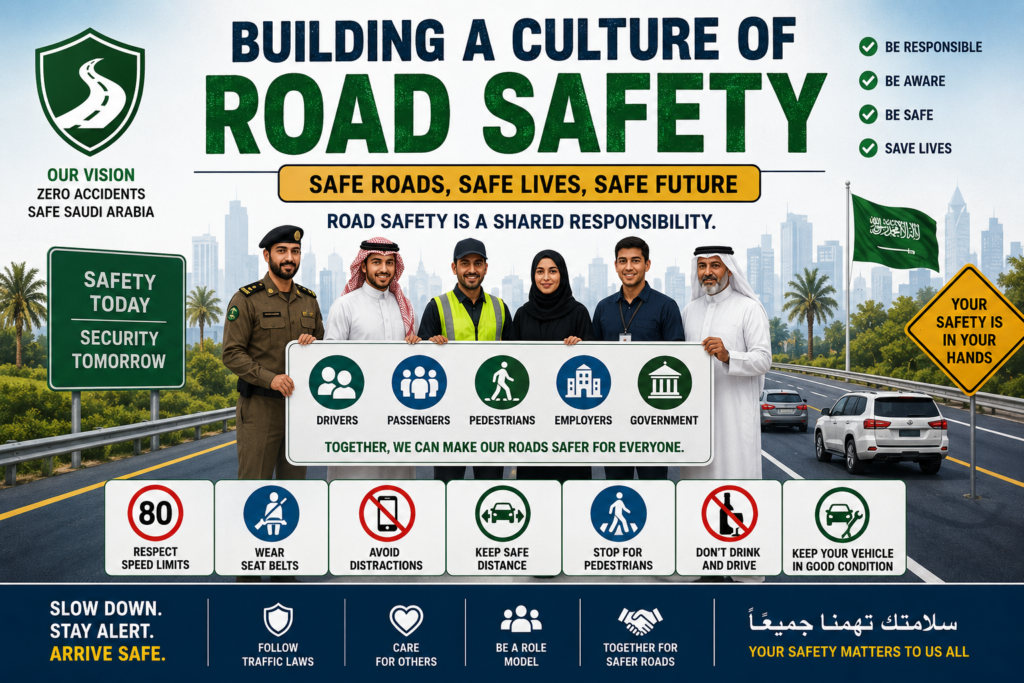
Building a Culture of Road Safety
Traffic safety is a shared responsibility between:
- Drivers
- Passengers
- Pedestrians
- Employers
- Government authorities
Simple actions such as obeying speed limits, wearing seat belts, avoiding distractions, and respecting traffic laws can save lives.
Every responsible driver contributes to making Saudi roads safer for everyone.
Conclusion
Saudi Arabia has implemented a comprehensive traffic enforcement system to improve road safety and reduce accidents. The speeding fines introduced by the General Directorate of Traffic (eMoroor) are designed not only to penalize violations but also to encourage responsible driving behavior.
Whether you are a Saudi citizen, an expatriate, or a visitor, understanding the speed limits and corresponding penalties is essential. A few extra kilometers per hour may seem insignificant, but they can lead to costly fines and, more importantly, increase the risk of serious accidents.
The best way to avoid penalties is simple: stay within the posted speed limit, remain alert, plan your journey in advance, and drive responsibly. Safe driving protects your life, your passengers, and everyone else sharing the road.
Drive responsibly. Respect speed limits. Arrive safely.

